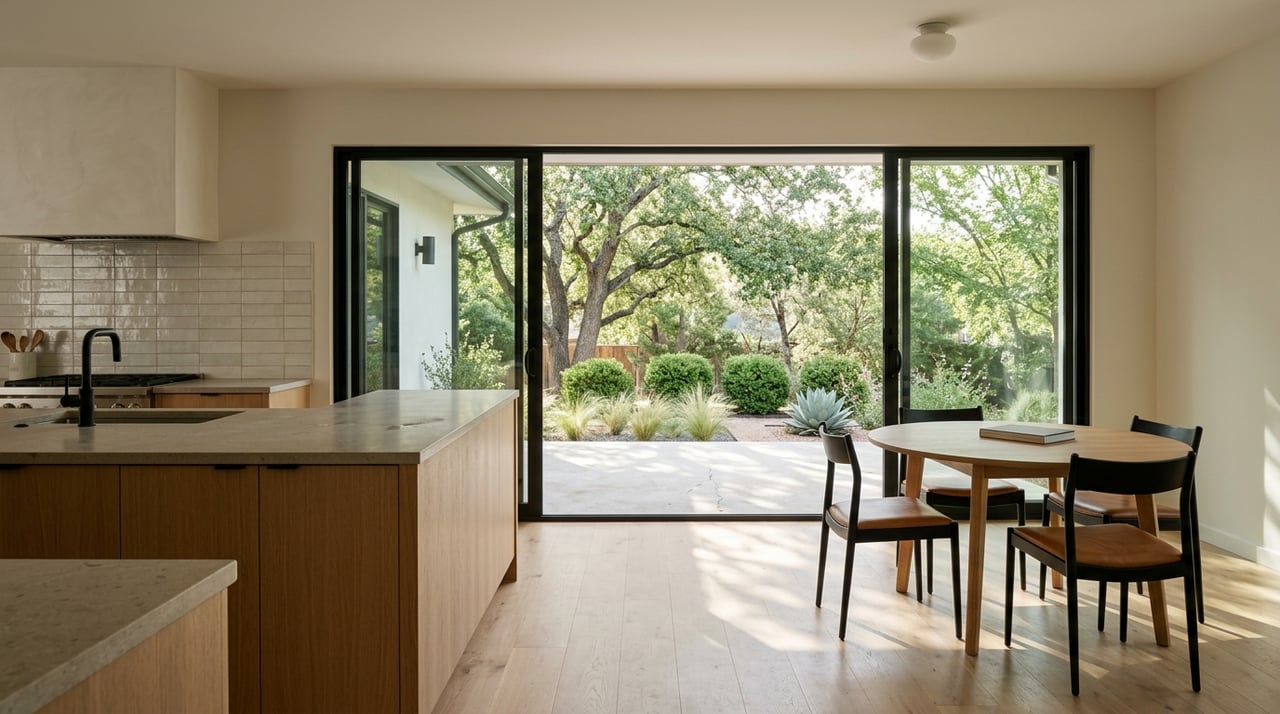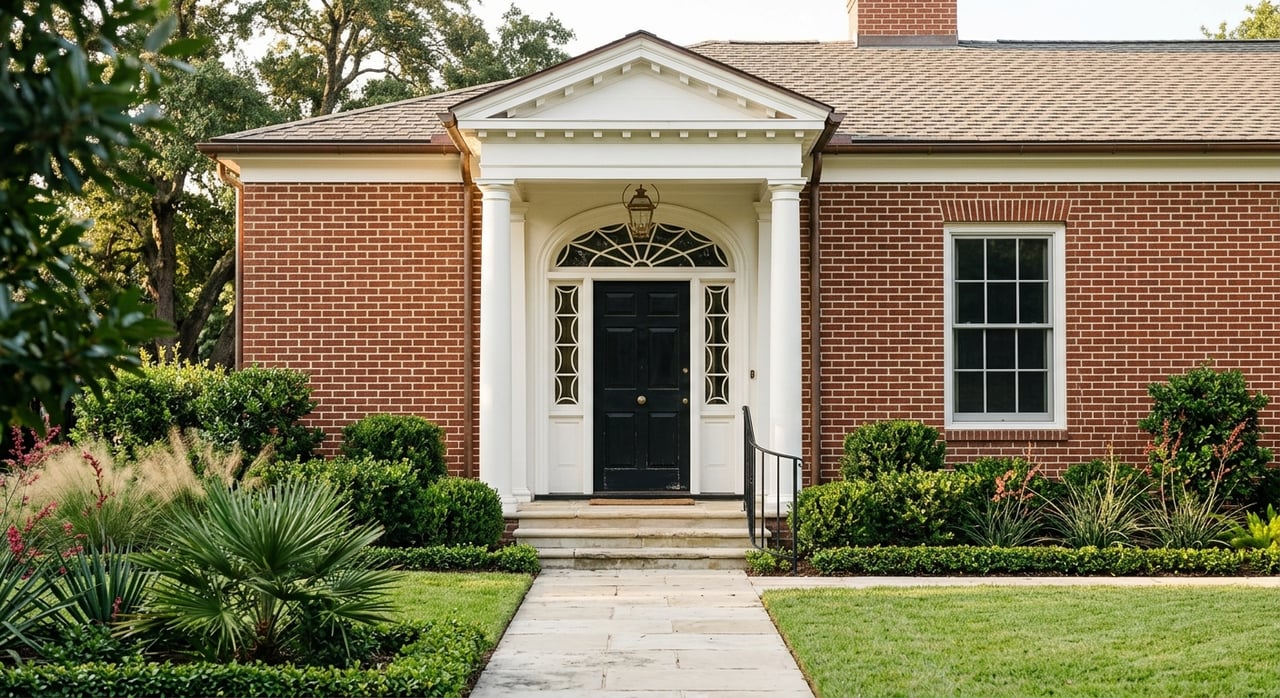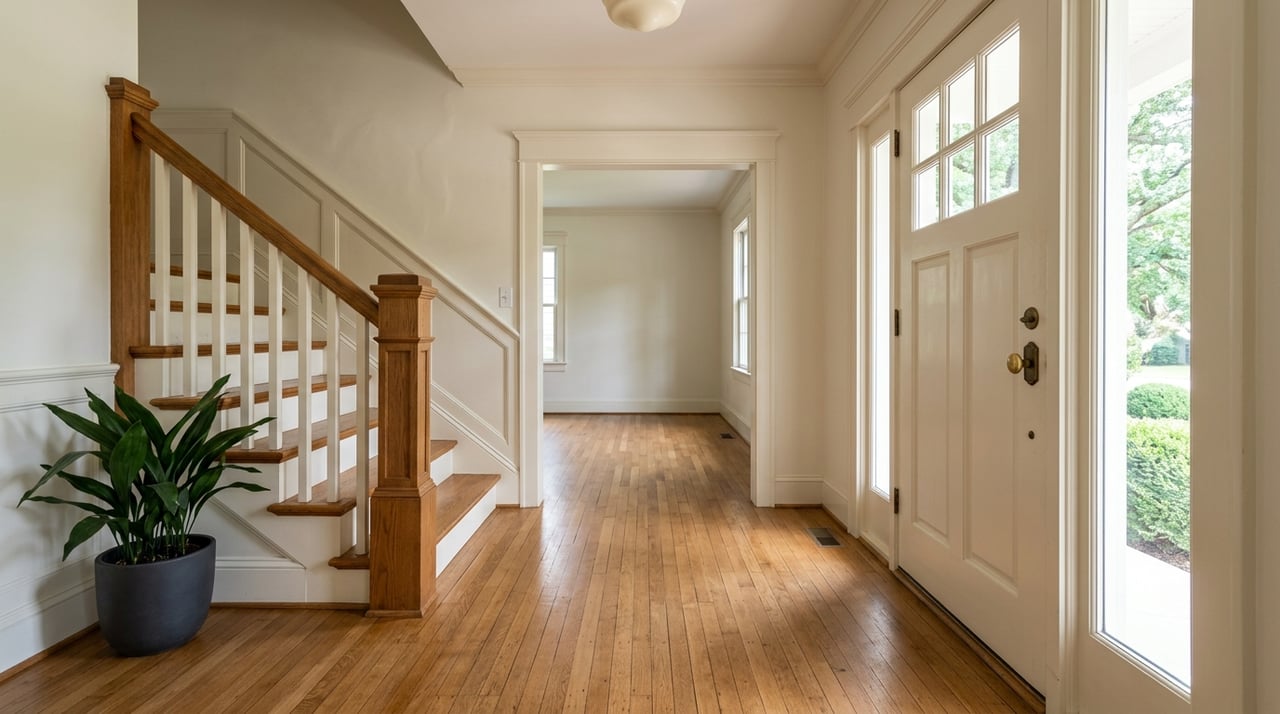
Texans and Brits do not agree on what counts as a small room. This never fails to amuse me.
The Size Gap
Here in Austin, a 12x12 bedroom is considered modest. In London, that same room would be described as "remarkably generous." Possibly "borderline luxurious."
Austin buyers often want space for a California King, two nightstands, and a Peloton. Where I grew up, we were thrilled if we could open the wardrobe without hitting the end of the bed.
The average new-build home in the UK is roughly 800 square feet. The average in Texas is closer to 2,200. That's not a minor cultural difference. It's an entirely different relationship with space.
Why This Actually Matters for Buyers
Perspective shapes how you judge space. And that affects every decision from your initial search to whether a home feels "right" on the first walkthrough.
If you're coming from LA, New York, London, or Hong Kong, Austin homes will feel palatial. If you've only ever lived in Texas, anything smaller than an aircraft hangar can feel a bit tight.
Neither reaction is wrong. But knowing which lens you're looking through helps you make better decisions about what you actually need versus what you're used to.
I've shown homes to buyers relocating from New York who couldn't believe how much space they were getting for the price. And I've shown the exact same homes to buyers from Dallas who thought the bedrooms were "a bit small." Same house. Different calibration.
This also affects how buyers interpret online listings. A home described as "spacious" in the Austin market means something very different from a home described as "spacious" in London. If you're searching from another city, visiting in person before ruling anything out is worth the trip.
The Downsizing Conversation
This comes up often with empty nesters and people looking to simplify. The idea of downsizing sounds appealing until they start touring smaller homes and everything feels cramped.
The issue usually isn't the home. It's the adjustment. After living in 3,500 square feet for fifteen years, 2,000 square feet feels restrictive. Give it six months and it feels liberating. But in the moment of the tour, the gut reaction is "too small."
Understanding that your sense of scale is learned, not fixed, makes the decision easier. You're not settling. You're recalibrating. And recalibration takes time, which is why I always recommend touring a range of sizes early in the process, before you've decided what you want. Let your eye adjust before your spreadsheet takes over.
The Practical Takeaway
Before you rule out a home because the bedrooms feel small, ask yourself: small compared to what? If the answer is "my current 4,000 square foot house," that's a different calculation than "small for how we actually use the room."
I also encourage buyers to measure the rooms they actually use in their current home. Most people overestimate. You think your bedroom is enormous until you measure it and discover it's 14x16. Which is lovely. But it's not the aircraft hangar you remembered. The new house with a 13x14 primary suddenly feels a lot more reasonable when you realize you're only losing two feet.
Space is emotional. Data helps. And a bit of perspective from someone who grew up thinking a garden meant a window box goes a long way. I've been recalibrating my own sense of scale since I moved to Texas. It's an ongoing project.
A bit of perspective keeps everything in proportion. Including your expectations.
Relocating to Austin and trying to recalibrate your sense of space? Happy to help you navigate that. → gemmawillans.com/about