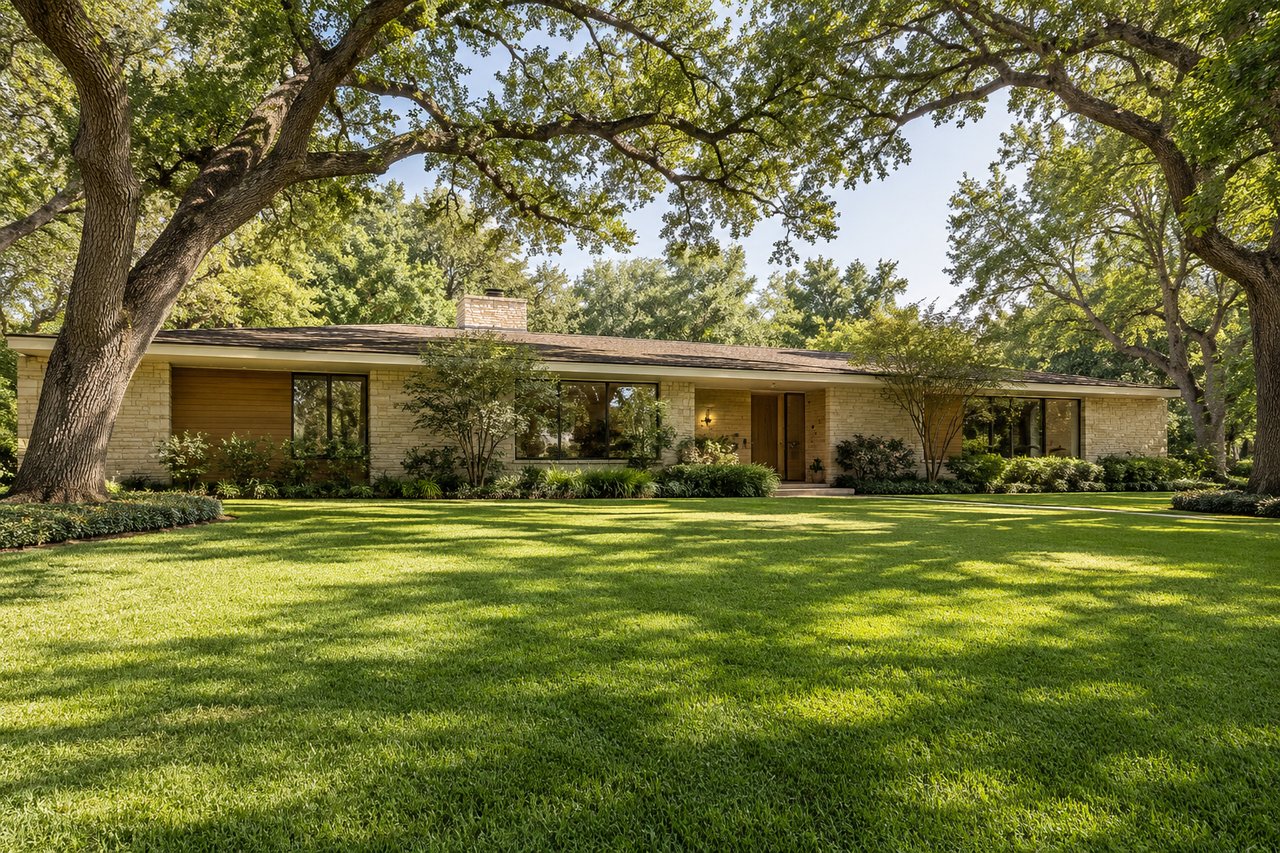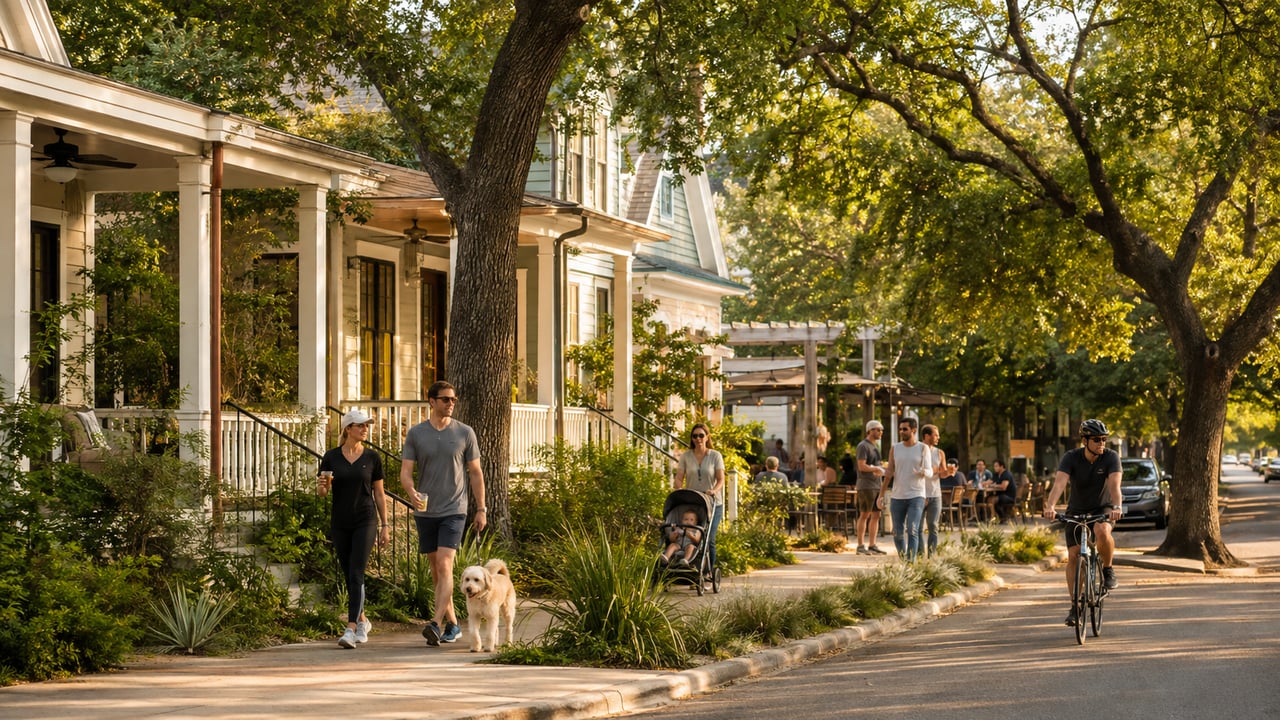
Three blocks of West Lynn Street hold four sit-down restaurants, a soda fountain from 1951, a coffee counter with a line out the door, and a marble bar that pours espresso in the morning and Negronis at night. Walk a quarter mile north and you're in a 42-acre park with a splash pad and a troll sculpture. Walk south and you hit the ten-mile trail loop around Lady Bird Lake. This is the compression that defines Clarksville, and it's the reason a Saturday here doesn't require a car, a reservation strategy, or a plan.
If you already live here, you know most of the names. What follows is what's happening on those blocks in 2026, where the small changes are, and how the pieces fit together on a day when you want to leave the house and not think too hard about it.
The Three-Block Dining Problem
The concentration on West Lynn is unusual. Four restaurants sit within roughly 200 yards of each other, and each has held on for years without cannibalizing the others. Jeffrey's at 1204 West Lynn is the fine dining, occasion-room end of things. Cipollina at 1213 West Lynn handles wood-fired pizza and house-made pasta for the nights you want something real without committing the whole evening to it. Taco Flats at 1110 West Lynn covers tacos and a dog-friendly patio, and Galaxy Cafe at 1000 West Lynn anchors the weekend brunch crowd.
Josephine House, Jeffrey's sister spot, holds down a little blue cottage on the corner of Waterston and West Lynn, and the schedule tells you exactly how it's meant to be used: breakfast and brunch daily from 9am to 2:30pm, happy hour Tuesday through Friday from 3 to 5, dinner Tuesday through Sunday, and a Monday steak frites service running 4 to 10pm. Sunday nights run a specific move worth knowing about: 50 percent off bottles from Jeffrey's own wine list. That's the neighborhood price on a Jeffrey's cellar, without the Jeffrey's dining room around it.
Taco Flats runs a longer day than most people realize, opening at 7:30am on weekdays and staying open until 10pm Sunday through Thursday, 11pm on Friday and Saturday, with patio seating under a shade cover that gets used.
A block over on Enfield sits the outlier: Nau's Enfield Drug, a working pharmacy with a soda fountain founded in 1951, counter seating, cherry Dr Pepper, and a griddle turning out cheeseburgers and grilled cheese. If you've got out of town guests who want old Austin without a two hour brisket line, this is the answer that takes twenty minutes.
Pease Park Isn't the Park You Remember
Pease is the piece of Clarksville that's changed the most in the last few years, and it keeps changing. The 42-acre stretch along Shoal Creek now runs a regular calendar of programming out of Kingsbury Commons, and the Treehouse observation pod has become the venue itself, not just an amenity sitting next to one.
The RISE Freedom Festival celebrates Black freedom communities founded by formerly enslaved people, and its second annual event ran this past March, tied specifically to the ground you're standing on rather than functioning as a generic park event. The Lives Remembered walking tour, developed with Black Austin Tours, recognizes the people enslaved by Governor Pease and shares some of their stories. The Treehouse itself hosted an ambient music event this past May, part of a growing set of evening programs staged inside the pod. Eeyore's Birthday Party still runs every April, and weekly programming, yoga, volunteer events, Summer Storytime at the amphitheater, keeps the calendar full on repeat.
If you haven't been to Pease since before the Kingsbury Commons renovation, the geography is worth restating. The Observatory Treehouse, the splash pad, the wooden playground, the troll sculpture, Shoal Creek's trails, and the open meadows now form a real destination cluster rather than a spread-out set of amenities you happen to walk past.
A subset of the land Governor Pease once owned became a freedom community called Clarksville. The park sitting on the rest of that land is now programming events that name that history directly, which is exactly why Pease's calendar reads differently than programming at any other Central Austin park. The land history and the neighborhood next door are the same story, told from two sides of the same fence line.
The Stops That Aren't Restaurants
The Clarksville and West Sixth corridor has held onto more independent retail than any other slice of Central Austin at this price point. Waterloo Records on Lamar still trades vinyl and hosts in-stores. Wally Workman Gallery operates out of a historic Clarksville home with rotating contemporary painting and works on paper. Caffé Medici on West Lynn draws a real weekend line for a real reason, and the original Whole Foods flagship on Lamar is walkable from most of the neighborhood. West Sixth Street picks up east of the neighborhood edge with a run of clothing, home goods, and specialty retail.
Two smaller landmarks matter more than they look like they should. Clarksville Park at 1811 West 11th Street sits on the original site of the Clarksville Colored School, which operated from 1916 to 1965. Sweet Home Missionary Baptist Church, founded before 1882, still stands and still holds services on the same block where it started. Neither is signage. Both are living.
Walking, Not Driving
The single most underused feature of living here is Shoal Creek Trail, which runs the linear park along the creek and connects Clarksville north into Pease and beyond, south to the Butler Hike and Bike Trail loop on Lady Bird Lake. The Butler Trail draws more than two million visitors a year across its full ten miles, but the segment closest to Clarksville is the least crowded stretch of the loop's western arc most mornings before 8am.
A route that uses the neighborhood the way it wants to be used looks something like this: coffee and a pastry at Josephine House's marble bar around 9am, north on West Lynn cutting over to Shoal Creek up into Pease Park, twenty minutes at the Treehouse if you haven't been up to the second-floor netting yet, back down Shoal Creek to the Butler Trail, left toward downtown or right toward Deep Eddy depending on how much sun you want, then a late lunch at Cipollina or Taco Flats depending on which one has the shorter line. That's a four hour Saturday touching five separate landmarks and never once putting you in a car.
One Thing Changing
The neighborhood isn't adding much inventory, but it's adding a little. Westline, a 16-residence project in the heart of Clarksville, is expected to finish sometime in summer or fall 2026, with two to four bedroom homes and private two car garages. That's a rare piece of new construction in a neighborhood whose fabric has been protected by National Register of Historic Places status since 1976. Once Westline is finished, it'll permanently change how that stretch of the block looks and feels. If you live nearby, it's worth walking past while it's mid-construction, before the finishes go on, since that's when you can see how big it's going to be next to the older homes around it.
What the Compression Is Actually Worth
The reason to pay Clarksville prices was never any single restaurant, park, gallery, or trail. It's the distance between them. Most Central Austin neighborhoods have a version of two or three of these pieces. Almost none have all of them inside a walkable perimeter that a Sunday runner can cover before breakfast is even over. That's the actual amenity. Everything else is just what happens on top of it.
Wondering what your Clarksville home is worth in a market that keeps rewarding walkability like this? I can give you a straight read on where your block sits inside the neighborhood, not just inside the zip code. → gemmawillans.com/sellers