Buy in Old Enfield and the architecture stops being a backdrop pretty quickly. It shapes how the home actually lives, how it sits on the lot, and what's easier or harder to change down the line. Here's how to actually read what you're touring, before you're standing in front of a house you've already fallen for without knowing why.
Why Old Enfield Feels Distinct
Old Enfield is the oldest and southernmost neighborhood in the Old West Austin historic district, and its development traces back to the Pease estate and a 1916 subdivision pattern. That history is why the streets read leafy, residential, and house centered rather than lot centered. Single-family homes and their outbuildings dominate the area, fencing was historically kept minimal, and garages tended to face the main street rather than hide down an alley.
For a buyer, that means the setting is part of what you're paying for. In Old Enfield, the architecture isn't just the front facade. It's the lot presence, the spacing between houses, the landscaping, and how the home actually meets the street.
The Styles You'll Actually See
Old Enfield isn't a one-style neighborhood, and that mix is part of the appeal. You'll find Colonial Revival homes, original bungalows, and newer contemporary work that tries to fit the historic setting rather than compete with it.
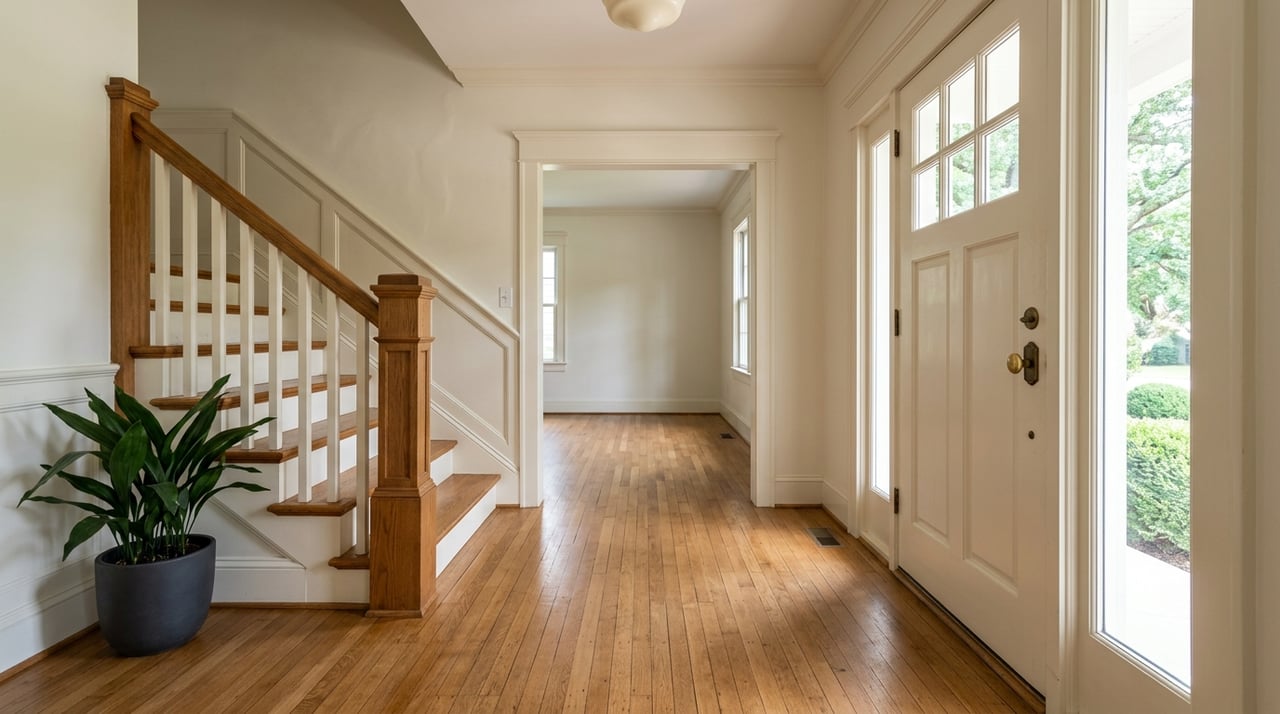
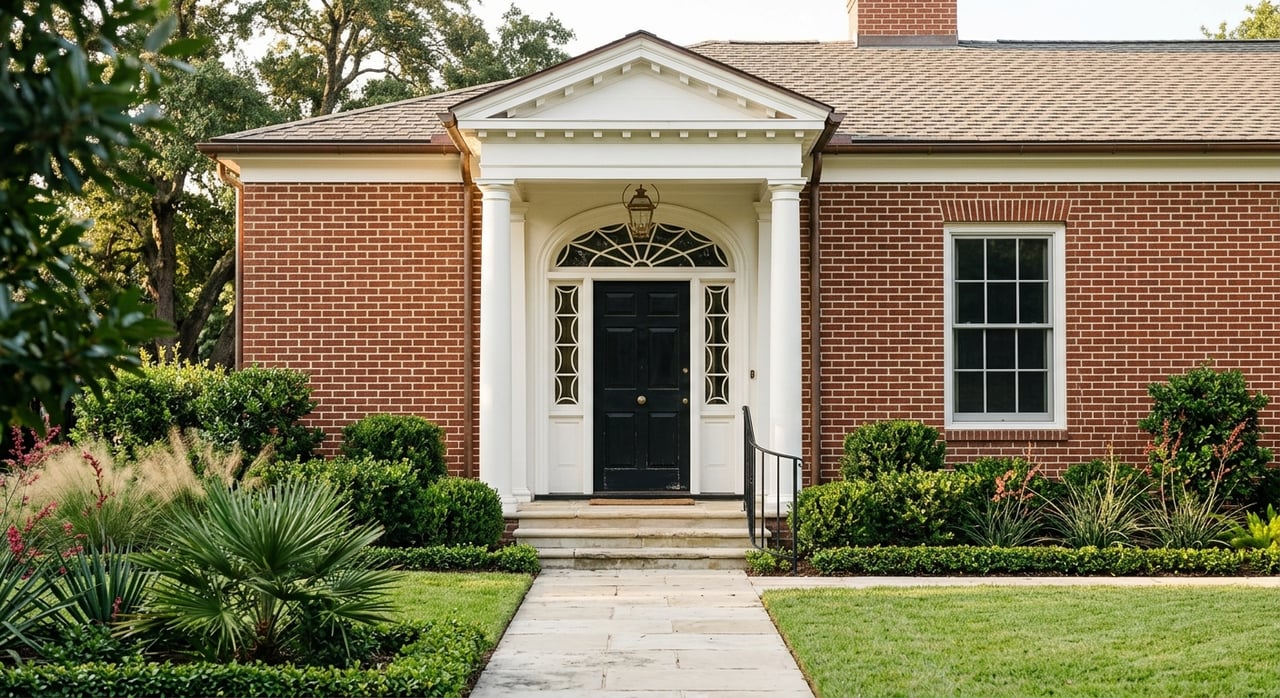
Colonial Revival is the more formal end of the spectrum. It borrows from late 18th and early 19th century American architecture, and you'll recognize it by symmetry: a centered front entry, evenly spaced windows, a side gabled or hipped roof, and often columns, pilasters, or fanlights around the door. These homes present a composed, almost mathematically calm face to the street. If a listing photo looks centered and balanced in a way that feels deliberate, that's Colonial Revival talking.
Bungalows sit at the other end. Typically one to one and a half stories, broad rooflines, deep covered porches, wide overhangs, tapered porch columns. This style peaked between roughly 1910 and 1930, which lines up neatly with when much of the neighborhood was actually built. Bungalows feel approachable from the curb because the porch isn't an afterthought, it's one of the main architectural features. Inside, historic bungalows were built around efficient planning and good light, so even a smaller footprint often lives better than the square footage number suggests.
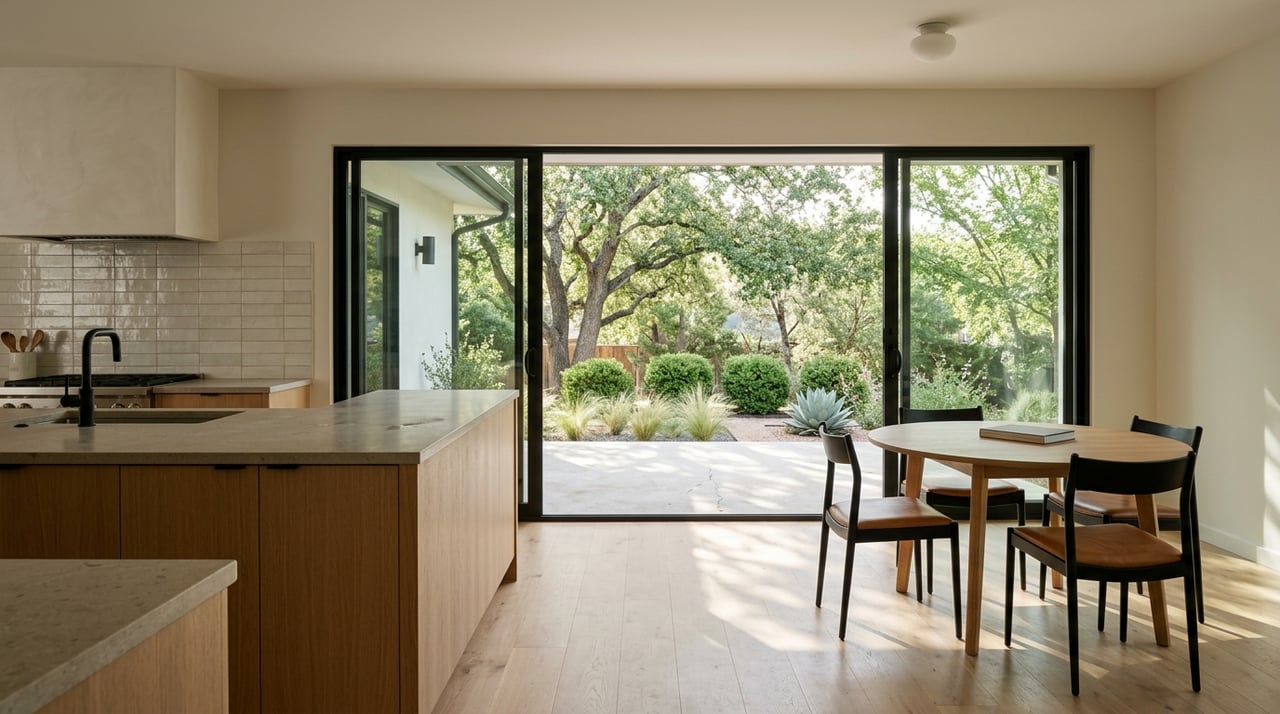
Then there's the contemporary work, and the good examples don't try to cosplay as old houses. The neighborhood's own planning guidance favors additions and infill that read clearly modern while staying compatible in scale, massing, and setback, not identical, just in step. In practice that usually looks like an original historic house with a modern rear addition, or a newer build that respects the block's rhythm without pretending to be from 1920. When it's done well, the street presence stays calm while the back of the house gets a genuinely current upgrade.
How to Read a House From the Curb
Before you ever step inside, Old Enfield tells you a lot from the sidewalk. Start with the roofline and height. A two story home with a balanced shape and centered entry usually signals Colonial Revival. A lower, wider house with a broad roof and a deep porch usually signals bungalow. That matters beyond aesthetics, because massing shapes how rooms stack or spread and how the house relates to its neighbors.
The porch is doing more architectural work than people give it credit for. On a bungalow, it's the defining feature, the thing that makes the house feel casual and connected before you've even reached the door. On a Colonial Revival, the porch still matters but supports a more formal composition overall. Either way, it's one of the fastest reads you'll get on a home's actual language.
Windows and symmetry tell you the rest. Evenly spaced windows and a centered door suggest the more formal historic styles. A facade that feels lower, more relaxed, less rigidly balanced is probably reading as bungalow. You don't need an architecture degree for any of this. You just need to actually look.
Don't ignore what's happening at the edges of the lot either. Fences, garages, and outbuildings are part of the story here, not incidental extras, because the historic pattern specifically favored minimal fencing and street-accessed garages. When you tour a home, notice whether those pieces feel like they belong to the same block or like someone bolted on a modern convenience without a second thought.
Why This Isn't Just Aesthetic
In Austin, what you're allowed to change after closing depends heavily on how a property is classified. Properties in National Register districts, which covers most of Old Enfield, get advisory historic review. Local historic districts carry real teeth, with actual approval required for exterior changes to contributing properties and for new construction. That distinction is not glamorous, but it's exactly the kind of thing that should shape your offer, not something you discover after you've already sketched an addition on a napkin.
Most Old Enfield buyers focus on finishes first, which is understandable, the finishes are what you see. But in a neighborhood built on historic layers, the smarter approach evaluates the house and the level of oversight attached to it at the same time.
What's Actually Worth Asking Before You Offer
Figure out what era and style the home actually represents, and whether it sits inside a National Register district or carries any other historic status that could affect exterior changes down the line. Ask whether the home already has a rear addition or newer infill component, and if so, whether it was handled well enough to preserve the original street presence. And look closely at the garage, the fencing, and any outbuildings to see whether they actually match the lot's historic pattern or feel like an afterthought.
None of this replaces real due diligence. But it's usually enough to separate a house that photographs well from one that actually makes sense for what you're trying to do with it.
The easiest way to understand Old Enfield is this: formality, practicality, and thoughtful modern work all coexist here, sometimes on the same block. That mix is what makes it interesting. The best homes here were never frozen in time. They just respected the patterns that made the neighborhood distinctive in the first place.
Considering a move to Old Enfield and want help reading a listing's architecture with a sharper eye? I can walk you through it. → gemmawillans.com/buyers