Austin's HOME rules sound like a green light for more units, more flexibility, and more options on single-family lots. In many parts of the city, that is largely true. In Bryker Woods, the fine print matters just as much as the headline.
If you are thinking about adding an ADU, reworking an older house, or evaluating a small investment play, this is what you need to know about what HOME may allow here — and where the real limits still show up.
What HOME Actually Did
Austin adopted its HOME amendments in two phases. Phase 1 was adopted on December 7, 2023, and Phase 2 followed on May 16, 2024. The city later added Site Plan Lite and infill plat updates in 2025.
At a high level, Phase 1 allows up to three dwelling units on SF-1, SF-2, and SF-3 lots. Phase 2 created a small-lot single-family option allowing one unit on lots between 1,800 and 5,749 square feet. In practical terms, HOME created more paths for adding housing, but not every path fits every lot — and in Bryker Woods, the gap between what is technically allowed and what is actually buildable can be significant.
Why Bryker Woods Is Its Own Conversation
The Central West Austin Combined Neighborhood Plan describes Bryker Woods as predominantly single-family and calls for preserving existing character, tree canopy, creeks, flood protection, and appropriately scaled development. That does not block change, but it does shape what tends to get through.
This is why HOME in Bryker Woods is best viewed as a decision tree rather than a blanket green light. A project may look straightforward on paper and still run into design, permitting, or compatibility issues once the specifics of the lot enter the picture.
How Phase 1 Applies
For most Bryker Woods owners, Phase 1 is the main rule set worth understanding. On SF-1, SF-2, and SF-3 lots, Austin allows up to three dwelling units — attached, detached, or a mix. For duplex, two-unit, and three-unit residential uses, building coverage is capped at 40% and impervious cover at 45%. Height follows the base zoning limits for those uses. Single-family residential use still follows the older Subchapter F framework, including the 32-foot height limit.
When an ADU Still Makes the Most Sense
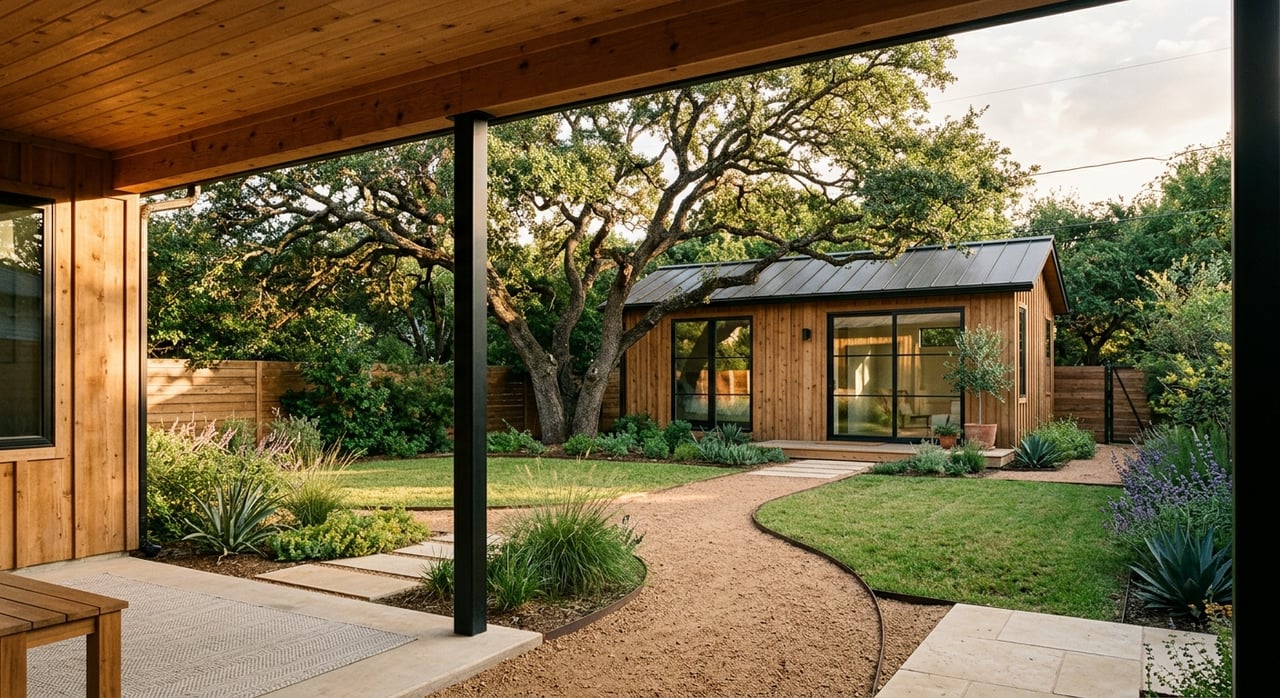
Sometimes the simplest option is the best one. An ADU is a separate dwelling unit on the same property as a single-family home, and the underlying lot must be zoned SF-1, SF-2, or SF-3 and be at least 5,750 square feet. That makes ADUs relevant for some Bryker Woods properties, but not all.
Austin has eliminated the zoning minimum separation between units, but building-code separation and fire requirements still apply, and each new unit needs a unique address or building number. More flexibility, yes. A free-for-all, no.
If your goal is to keep the main house and add one modest unit, an ADU or a preservation-oriented two-unit setup is usually the cleanest route. In Bryker Woods, the least dramatic plan tends to be the most workable one.
When Phase 2 May Fit Better
Not every lot here clears the 5,750-square-foot ADU threshold. If yours falls below that, Phase 2 may be the more useful framework because it allows one unit on lots from 1,800 to 5,749 square feet.
This does not mean a small lot suddenly supports the same outcomes as a larger one. It means the city created a path for one unit on certain smaller parcels, which matters if you are evaluating an infill opportunity or a lot split scenario.
Lot Splits and Infill Updates
If you are thinking beyond a simple addition, the 2025 infill updates are worth knowing about. Three- to four-unit projects within city limits no longer require a site plan or site plan exemption, although zoning and floodplain rules still apply. For one-acre-or-smaller resubdivisions that qualify as residential infill, Austin also offers streamlined drainage review.
That can reduce friction for smaller projects, but it does not eliminate the need for careful due diligence. In Bryker Woods, feasibility still depends on lot size, zoning, floodplain issues, siting, and any local overlays that may apply.
Compatibility Rules Have Not Gone Anywhere
This is where people get tripped up. HOME did not erase Austin's compatibility standards. If a site adjoins or sits within 540 feet of SF-5 or more restrictive zoning, compatibility rules can affect height, setbacks, screening, parking, and driveway placement.
A project that is technically allowed under HOME may still need substantial design adjustments to fit the site and comply with surrounding conditions. In Bryker Woods, this is not a footnote. It is often the factor that determines whether your plan works or does not.
Deed Restrictions Are a Separate Issue Entirely
Zoning and deed restrictions are not the same thing. Austin is clear about this: a zoning change does not automatically override a property's deed restrictions, and those restrictions may still be enforceable even if the zoning now allows more intensive use.
If the answer matters for your purchase, development budget, or renovation plan, check the property-specific restrictions before filing anything. Do not let a quick online summary make a six-figure decision for you.
Historic Context Can Affect Older Homes
Bryker Woods has historic-resource context worth checking, especially if you are working with an older home. Austin's historic survey inventory includes North Central Austin, including this neighborhood. Being in a surveyed area does not automatically create a historic district or landmark designation, and it does not automatically stop a project — but it is one more thing to verify before assuming a straightforward redevelopment path.
The Preservation Bonus Is Worth a Closer Look
For many Bryker Woods owners, the Preservation Bonus may be the most interesting tool in the HOME framework. It can allow one or two new units that exceed standard FAR if you preserve an existing structure that is at least 20 years old.
Austin's first-year HOME report found that projects using the Preservation Bonus retained an average of 94% of the original structure. That tells you something: some owners are using HOME not just to add units, but to do it while keeping much of what is already there. For a neighborhood like Bryker Woods, where the existing homes are part of the appeal, that matters.
What the Numbers Show So Far
HOME is producing real results. As of the most recent city data, more than 600 applications have been approved under Phase 1, with over 1,200 new units approved citywide. The city's first annual report also found no measurable increase in demolition applications.
Worth watching: on May 7, 2026, City Council advanced a resolution to further revise HOME rules, potentially allowing two units on lots as small as 3,600 square feet. That could expand options for smaller Bryker Woods lots, but the specifics are still being worked through.
For Bryker Woods owners, none of this means every lot should become a multi-unit project. It does mean the framework is active and producing real approvals, and the property-specific analysis matters more than the citywide headline.
What Buyers, Sellers, and Investors Should Know
If you are buying: HOME can affect how you value a lot. A property with enough size and the right zoning may offer future flexibility, but that flexibility is never automatic. You want a realistic read on what the site can actually support.
If you are selling: This is where precise positioning matters. Some homes appeal because of existing improvements. Others draw interest because of lot configuration, preservation potential, or a viable multi-unit path. The key is to frame the opportunity accurately and avoid overselling what still needs verification.
If you are investing: Separate the housing rules from the rental rules. An ADU built after October 1, 2015 may not be rented as a short-term rental for more than 30 days in a calendar year, and an STR license is still required. Your pro forma should not treat an ADU as a blank-check short-term rental strategy.
Want to know what HOME actually means for a specific Bryker Woods property? I can help you assess the lot, the rules, and the realistic options. → gemmawillans.com/about
FAQs
How many units can HOME allow on a Bryker Woods lot?
Under Phase 1, Austin allows up to three dwelling units on SF-1, SF-2, and SF-3 lots, but compatibility rules, deed restrictions, and floodplain requirements can still limit what is feasible on a specific property.
Can you build an ADU in Bryker Woods?
You may be able to if the lot is zoned SF-1, SF-2, or SF-3 and is at least 5,750 square feet. Building-code separation and fire requirements still apply.
What does HOME Phase 2 mean for smaller Bryker Woods lots?
Phase 2 allows one unit on lots between 1,800 and 5,749 square feet, which may create an option for smaller parcels that do not meet the older ADU size threshold.
Do compatibility rules still apply in Bryker Woods after HOME?
Yes. Compatibility standards can still apply when a site adjoins or is within 540 feet of SF-5 or more restrictive zoning, affecting height, setbacks, screening, parking, and driveways.
Should you check deed restrictions before using HOME in Bryker Woods?
Yes. Zoning and deed restrictions are separate, and deed restrictions may still be enforceable even when zoning rules change.
Can a Bryker Woods ADU be used as a short-term rental?
Only in limited cases. An ADU built after October 1, 2015 may not be rented as an STR for more than 30 days in a calendar year, and an STR license is required.
What is the Preservation Bonus under HOME?
It can allow one or two new units beyond standard FAR when you preserve an existing structure that is at least 20 years old. Projects using it have retained an average of 94% of the original structure.