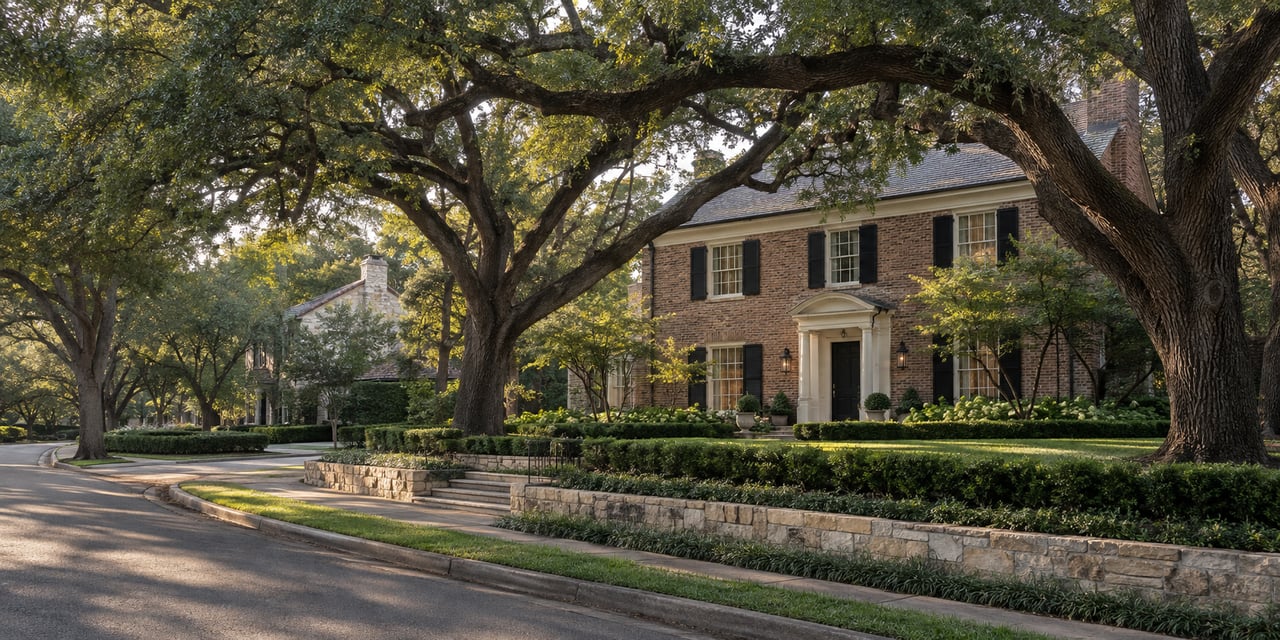
The charm in Old Enfield is never the question. Anyone standing on one of these streets under the oaks understands the appeal in about four seconds. The question buyers need answered is quieter and less romantic: what exactly does this house's historic status let you do with it, and how long will it take to find out.
Old Enfield sits inside the Old West Austin National Register Historic District, which the city describes as the largest historic district in Texas, covering roughly 1,600 homes and 2,500 buildings between West 13th, Lamar, West 35th, and MoPac. That's a lot of ground to generalize about, which is exactly why generalizing about it is the first mistake buyers make. The same rules apply next door in Pemberton Heights, and I've written them out house-by-house on my Pemberton Heights historic homes page.
Not All Historic Status Means the Same Thing
Here's the distinction that trips people up. A local historic district carries real teeth in Austin, through a historic district overlay that governs exterior work directly. National Register status, which is what covers most of Old Enfield, is mostly honorific. It doesn't touch zoning. But it isn't a free pass either. Certain exterior alterations, additions, and new construction on contributing properties still require review, so "it's just National Register" is not the reassurance some buyers think it is. Before anything else, confirm the exact classification through the city's Historic Property Viewer: landmark, local district, National Register, contributing or noncontributing. Everything downstream depends on that answer.
What the Neighborhood Actually Looks Like
Old Enfield isn't one architectural style repeated block after block. You'll find Greek Revival next to International Style, wood-frame homes finished in brick, stone, stucco, or some combination, with brick veneer showing up constantly. Some of the housing stock in the broader Old West Austin area runs past a century old, and the Enfield subdivision itself dates to 1916. Lots are low density, mostly single-family, with garages and carports tucked in rather than featured, minimal fencing, and mature trees that clearly predate everyone currently living there.
Why the Exterior Carries More Weight Here
In a typical neighborhood, square footage does most of the talking. Here, how a house sits in the streetscape matters just as much: massing, porch, roofline, window pattern, the whole street-facing presence. That doesn't mean nothing can change. It means visible exterior changes carry more consequence than buyers expect, and a beautifully updated house can be hiding a review problem if the prior owner skipped the paperwork. I'd rather my buyers find that out during due diligence than during their first remodel.
What Actually Triggers Review, and How Long It Takes
Exterior alterations, additions, permanent site work, signage, and freestanding new construction on landmarks, contributing properties, and National Register parcels all require a historic review application, and the city expects landmark and National Register projects to follow its current Historic Design Standards. Some smaller, less visible projects, like a modest one-story rear addition, may get an administrative nod rather than a full public hearing. Anything larger typically goes to the Historic Landmark Commission, and that process can run up to 75 days from the first meeting. Full demolition or relocation of a contributing building can stretch to 180 days. None of that means every project becomes a saga, but if your renovation plans depend on a tight timeline, build the extra months in now rather than discovering them later.
Austin's design standards lean on the Secretary of the Interior's Standards for Rehabilitation, which in practice means repairing original materials rather than replacing them wherever possible. Original windows are the classic example. Weatherstripping and better screens can get you close to the energy performance of full replacement, so if your instinct walking into an old house is to rip out everything original, this is a neighborhood that rewards a second look before you do.
What to Confirm Before You Go Under Contract
Start with the designation itself, verified through the Historic Property Viewer, including whether the home is contributing or noncontributing. If it isn't formally designated, check whether it shows up in the city's historic resource surveys. Survey inclusion doesn't create designation, but it's a signal worth knowing about before you assume you have a clean slate.
Ask for permit history next: prior certificates of appropriateness, any record of unpermitted exterior work. This is the single most common way buyers inherit someone else's unfinished paperwork, and it's far cheaper to catch during due diligence than during your own first project.
Keep your inspection contingency intact and schedule it early. Old Enfield's charm and its plumbing were not built on the same timeline, and an independent inspection is non-negotiable no matter how good the house looks.
If the home predates 1978, expect lead-based paint disclosure before you sign, with roughly a ten-day window to test if you want it. If your renovation plans involve disturbing painted surfaces, lead-safe practices need to be part of that budget from the start, not an afterthought.
Check floodplain and drainage status, particularly if you're anywhere near Shoal Creek or a lower-lying block. The city requires floodplain review for anything in or within 100 feet of the 100 year floodplain, and water has never once cared about a buyer's optimism.
Finally, verify deed restrictions and restrictive covenants yourself. The city treats that as the buyer's responsibility, not something that gets flagged for you automatically, and those restrictions can limit what you build independent of any historic review entirely. And don't assume a historic tax benefit comes standard. Current abatement programs are built around local historic districts specifically, and landmark exemptions run through TCAD between January and April, so any incentive depends entirely on your parcel's exact status.
The Actual Tradeoff
Old Enfield sells scarcity, architectural character, and a neighborhood fabric that has stayed remarkably intact. That's rare and worth paying for. What it asks in return is discipline: slower approvals, narrower renovation paths, and more homework before you write an offer than most Austin neighborhoods require. That's not a flaw. It's just the actual shape of the deal, and buyers who understand it going in tend to do far better here than buyers who fall for the porch and figure out the rest later.
Considering a purchase in Old Enfield and want a clear read on what a specific property allows? I can walk you through it before you're under contract. → gemmawillans.com/buyers